

Micah Jones
Dr. Micah Jones received her PhD in History and African American Studies at Yale University in 2023. She is working on a book titled The Price of Freedom: Race, Consumption, and the Long Black Freedom Struggle, 1915-1970. Her work places Black shoppers at the center of histories of consumption, racial formation, and the Civil Rights Movement. She argues that chain stores simultaneously undermined and upheld anti-Black racism during the Jim Crow era by welcoming Black people as shoppers but rejecting them as workers. Dr. Jones' book also shows how Southern Blacks weaponized their consumerism to dismantle anti-Black racism.
Dr. Jones teaches courses on African American history, the Civil Rights Movement, and consumerism. During the Winter 2026, she will offer History 251: African American History since 1877 and History 471: Shopping While Black.
Q: Dr. Jones where are you from?
A: I grew up in Georgia, specifically in the northern suburbs of Atlanta.
Q: What surprises you most about the PNW?
A: The amazing craft scene. I don't know if it's Eugene, specifically, or the PNW in general, but there's a real appreciation for hand crafts here. I moved here already into sewing, crocheting, and knitting, but now I'm thinking about getting into pottery.
Q: What is your favorite movie?
A: Right now, I'm a big fan of Ryan Coogler's Sinners. As a historian of race and consumerism, I loved the choice to include Chinese grocers in the film. For anyone who found the larger social world of Sinners intriguing, you might enjoy my course Shopping While Black (Hist 471).
Q: What song best represents your personality?
I have been listening to Bad Bunny's latest album, and, in particular, "DtMF" on repeat on my commute. The whole project is such a beautiful love letter to the people and places that have made you who you are, and an invitation to cherish and protect them. In the classroom, I am a fan of teaching with the works of Nina Simone and Gil Scott-Heron. Their music offers such a unique window into the politics and culture of their moment.
Q: Do you have any hobbies/special (secret) talents?
A: During the pandemic, I learned to make bagels.
Q: What/Who inspires you?
A: I take inspiration from Ella Baker, icon of the Civil Rights Movement, and Dr. Crystal Feimster, my grad school adviser and friend. Baker was a brilliant strategist and organizer. However, her thoughtful and sustained mentorship of the young people around her was one of her greatest contributions to the cause of racial justice. In my own life, I benefited from the rigorous, but deeply loving teaching practices of Dr. Feimster. It is one of my goals for my career to honor this gift by paying it forward to my own students.
Q: What is the most important thing students should know about Black Studies?
A: I want students to know just how intellectually beneficial it is to engage with an interdisciplinary space like Black Studies. The Black Studies minor is a chance to be in conversation with a diverse array of scholars and peers who bring to bear their own methodological practices and perspectives to their work. It will make you a stronger thinker and better communicator, and those skills will serve you whatever you do next.
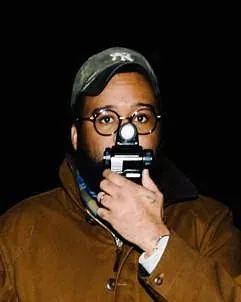
Zora J Murff
Zora J Murff is an Assistant Professor in the Art Department at the School of Art & Design. He is an artist and educator who uses visual media to explore Blackness and Anti-Blackness in the U.S. to raise consciousness about and for the Black liberation. His work has been collected and exhibited by the Museum of Modern Art, Los Angeles County Museum of Art, Museum of Contemporary Photography, Denver Museum of Art, and The High Museum of Art. His current exhibit RACE/HUSTLE at Mass MoCA features "photographs, assemblages, videos, and text works that examine physical, psychic, and political violence" against people of African descent in America in ways that connect the past to the present.
Professor Murff teaches Introduction to Photography (ARTO 250), Film & Darkroom (ARTO 350), and Advanced Photography (ARTO 484). In the summer of 2026, he will teach a course called COPY + PASTE: Photography, Collage & Appropriation. In COPY + PASTE where students will explore how photography, collage, and appropriation overlap through history, theory, and contemporary practice. Students will engage with analog and digital imaging, scanning, screen capturing, inkjet printing and digital software to create different types of collages. Murff also teaches a combined majors seminar called Evidence that introduces students to histories and theories related to photography, imperialism, social power, and the Black Radical Tradition.
Dr. Murff, where are you from?
I’m from Des Moines, Iowa and have also lived in Nebraska, Arkansas, and Rhode Island.
What surprises you most about the PNW?
The landscape! I’m from the Midwest, so I’m accustomed to flat and plain backdrops. To be greeted with such an amazing backdrop is a wonderful start every morning.
What is your favorite movie?
I don’t have a specific favorite movie, but I do have go-to genres depending on what the vibe is. If I’m looking for 90s and 00s action-thrillers, I might put on something like "The Negotiator" or "Die Hard.: For suspense, I want heady and dark narratives like "Momento" or "Se7en." I’m a big John Singleton fan and will definitely be throwing on "Higher Learning" soon.
What song best represents your personality?
Probably something that you can ride to with the top back like Ice Cube’s, “It Was A Good Day”.
Do you have any hobbies/special (secret) talents?
I love to cook and make the meanest pot of greens this side of the Mississippi.
What/Who inspires you?
I was recently talking with a friend about Fred Wilson’s installation, Cabinetmaking 1820-1960, from his project "Mining The Museum" (a collab with the Baltimore History Museum). In this work, Wilson uses sharp technical analysis through contextual reading. His specific arrangement of chairs and a whipping post is confrontational and teaches us uncomfortable intersections between history, material culture, race, and religion. To me, this Cabinetmaking 1820-1960 is evergreen; I strive to make work that meets Wilson’s bar.
What is the most important thing students should know about Black Studies?
Learning about and engaging skills of visual literacy when consuming media and images can aid one in seeing, analyzing, understanding, and antagonizing the harmful principles and practices of living in a racialized society. I use this standpoint in my teaching to demonstrate how Black thinkers and makers across time have used art and the Radical Tradition as a tool to free us from the traps of cultural neocolonialism. Teaching these skills propagates tactics for intellectual self-defense.