
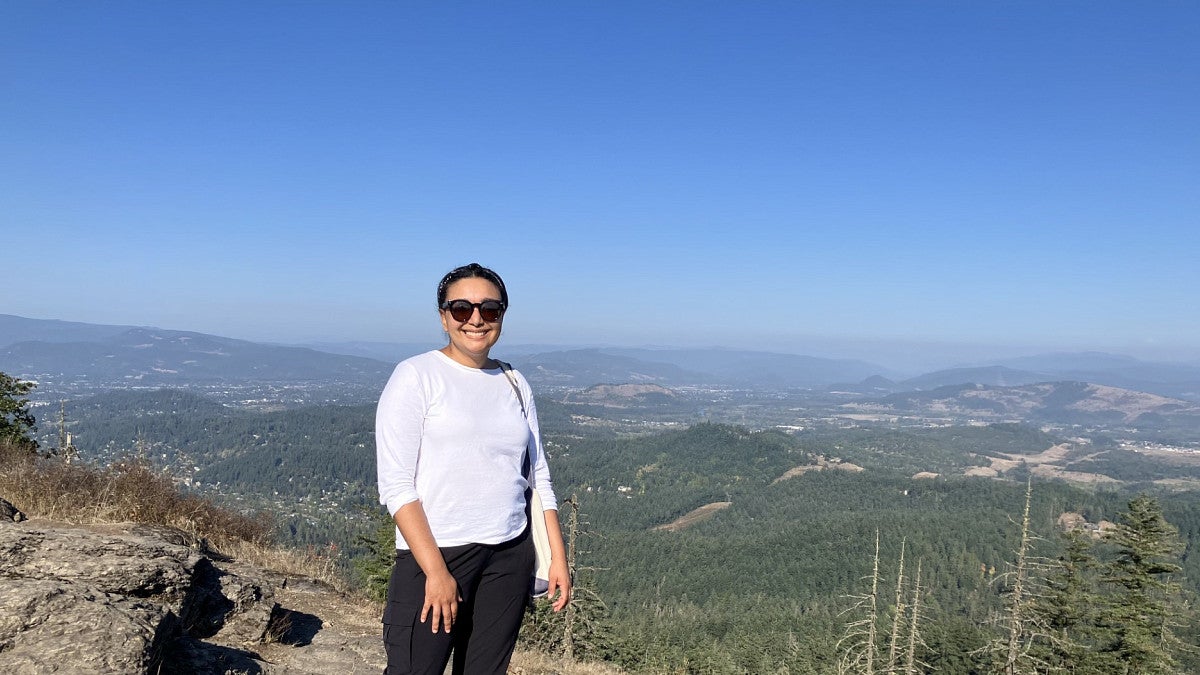
Micah Jones joined the College of Arts and Sciences as a history assistant professor in fall 2025. Jones is a historian specializing in Black studies, Southern history, and gender history. She's working on a book that examines the Civil Rights Movement as a consumer struggle, pushing for racial justice when discriminated by chain stores.
What was it about the University of Oregon and history department that drew you here?
During the hiring process, I was really struck by the way University of Oregon offers a wonderful balance between research and teaching. Like so many academics, I was drawn to the profession by the unique opportunity it offers to be led by your intellectual curiosity. However, I also saw becoming an educator as a way to pay forward the time, energy, and love my mentors poured into me throughout my educational journey. At UO, I feel my work as a teacher and a scholar is valued and supported. Every day, I get to play a part in preparing students to be well rounded citizens, as well as thoughtful consumers and producers of historical knowledge.
How does your work help us understand the Civil Rights Movement history and race in the US today?
Yes, my book is tentatively titled "The Price of Freedom," and it reframes the Civil Rights Movement as a consumer struggle. I look both at how Black people were discriminated against as shoppers, and the ways they leveraged their spending power to demand racial justice. I cover a period from about 1915 to 1970. It remains true today that we gain important insight into our social standing and belonging from the everyday experiences we have as shoppers. For instance, race shapes who is viewed with suspicion and who is presumed trustworthy. My work offers historical context for these social realities. I also hope the book will inspire people to think about racial equality more holistically. Freedom concerns every aspect of public and private life, from the polls to the produce aisle.
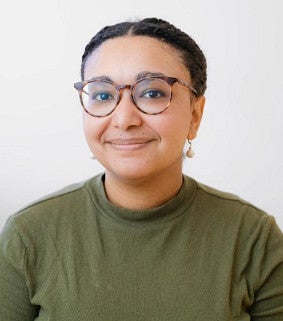
How did you discover your passion for your academic expertise?
As an undergraduate, I wrote my senior thesis on the role that gender played in the development of SNCC, a civil rights organization. I came into graduate school knowing that I wanted to continue writing about the movement, but from a different angle. While doing exploratory research, I kept coming across these violent encounters between white grocers and their Black customers. I wanted to know why stores seemed to be sites of interracial conflict. In trying to answer that question, I learned so much about how stores themselves were changing in this period, and how Black people were uniquely impacted by their evolution. I did not intentionally set out to write about stores, grocery stores in particular, but the project was asking to be written!
Why should students consider taking your classes or classes generally in history?
History, in general, is so frequently cited as a justification or explanation for why things are the way they are or why we do or don’t need to take particular actions as a society today. I think it’s fair to say this is particularly true and charged in the case of African American history. I see my courses as a chance for students to ready themselves to be thoughtful participants in these arguments and debates.
How do you approach teaching history in the class? And how does majoring in history and history courses prepare students for a post-college career and life as a citizen?
I really like to emphasize working with primary sources, which are materials produced during the time period we are studying. These could be speeches, music, art, poetry, letters, etc. Together, we analyze this material and use it to better understand the past. We also use primary sources to make arguments about history. The ability to analyze evidence, and to utilize it to craft persuasive and clear arguments will serve students well no matter what career path they take.
Where did you grow up?
I grew up in Georgia in the suburbs to the north of Atlanta. For all the region’s contradictions and complexities, I’m proud to be a Southerner.
What do you enjoy doing outside of work?
I’m an avid crafter, which I am learning is a great fit for Eugene. I grew up sewing and picked up crocheting and knitting in graduate school. I have historically not been very outdoorsy, but I am letting the Pacific Northwest make a convert out of me.