
Japanese pop culture is all around you. It includes fashion, games, manga, anime, toys and music. What makes Japanese popular culture so fascinating? How are cute characters like Hello Kitty — arguably the most recognized icon in the world — and games like Pokémon — the world’s highest grossing franchise — transforming global politics and the ways people construct their own identities? Students in ASIA 399: Japanese Popular Culture and the World explore these same questions and were excited to show off their favorite pop culture items when CAS Communications visited class for the video featured above.
Japanese Popular Culture and the World is a well-attended class in the College of Arts and Sciences (CAS) taught by Alisa Freedman, professor of Japanese literature and culture. She created the class a decade ago to help students better understand the trends they love, their culture and social meanings, and the patterns of globalization they represent.
“The class was inspired by my research and teaching interests in how culture and people flow between Japan and the US, creating new practices in the process,” she said. “It was also inspired by discussions with UO students about how they make Japanese popular culture part of their lives in Oregon.”
Since its inception, the class has grown from a freshman seminar where new students could form communities and gain academic skills to a large enrollment 300-level class that counts toward many majors and includes students from all grade levels.
Freedman finds that popular culture provides an accessible means to talk about topics otherwise difficult to approach.
“The appeal of popular culture lies in its escapism and easy consumption without having to think deeply,” said Freedman. “But when we do think about it, it teaches about society, business, politics, globalization, identity, media, communication, art, psychology and so much more.”
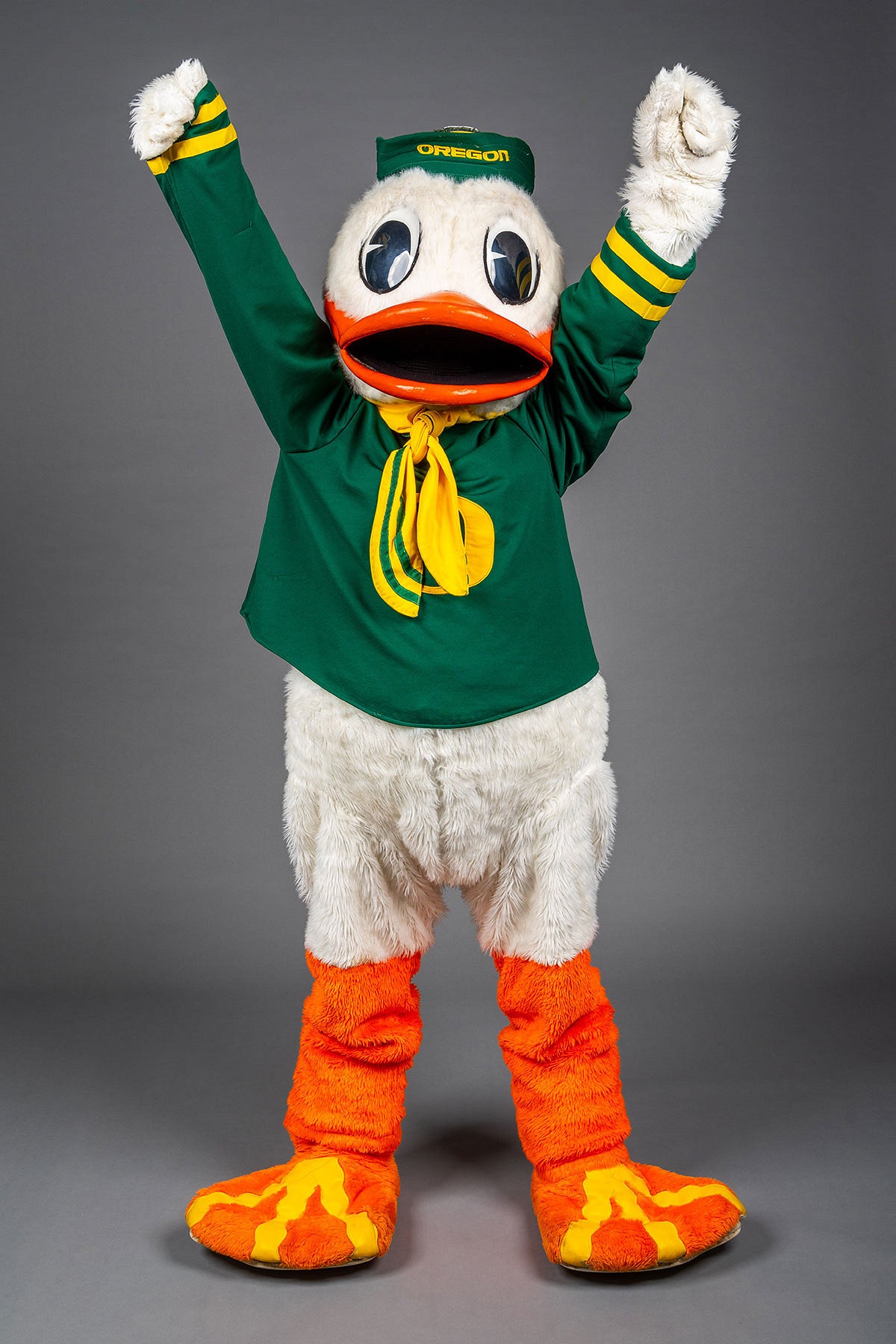
Examining the Duck through the lens of pop culture
CAS Communications: In the video featuring students from ASIA 399: Japanese Popular Culture and the World, you reference the Duck, University of Oregon’s mascot, as a popular culture figure. Can you explain how the Duck fits to the discussion and activity of the class?
Alisa Freedman: In my class, we analyze the Duck as a popular culture figure and compare the Duck with iconic Japanese characters, like Hello Kitty and Pikachu, and local mascots, like Kumamon who represents Kumamoto, an area in the southern island of Kyushu (Japan). We discuss similarities and differences in aesthetics, marketing, goods and public appearances.
The Duck has inspired our class unit on mascots and how they form and cement communities, make institutions and ideas memorable, inspire creativity, promote branding and public relations, and become part of our shared cultural vocabularies and memories. We discuss how the Duck was created through student newspapers and fan media and serves to bring the UO community together in a positive, cheerful and motivating way. We want goods featuring the Duck and proudly wear images of the Duck.
We examine how the Duck’s appearance and name changed over the decades and how this teaches notions of inclusion, dentity and strength, for example. The Duck’s collaboration with Labubu in fall 2025 provided the perfect opportunity to discuss how mascots expand their fan bases, create new shared content and help globalize trends.
Each time I teach ASIA 399, the class creates their own mascot, which I feature on presentations and assignment sheets to unify our community through shared culture. I make stickers of the mascots as class mementos. Students put them on their water bottles, phones and computers.
CASCOMMS: Where can people& learn more about the Duck?
AF: I am a fan of he Duck and have learned about the Duck from UO media and class discussions. For example, there are wonderful teaching materials about the Duck available through UO Special Collections and University Archives, including The Oregon Mascot, Part 1: The Webfooter Years, and The Oregon Mascot, Part 2: Becoming the Ducks. I encourage anyone who is curious about how the Duck came to be our mascot in its current form to read this series.